
Purchasing a high-quality dehumidifier is the first step towards a healthier home environment. To ensure it operates at peak efficiency for years to come, proper operation and preventive maintenance are key. Here’s an essential guide and solutions to common questions.
Optimal Operation & Placement: For best results, place your dehumidifier in the center of the room or area needing treatment, away from walls and furniture to allow for proper airflow and ventilation. Keep doors and windows closed to prevent humid outdoor air from entering. The ideal relative humidity (RH) level is between 30% and 50%. Setting your unit within this target RH range prevents overworking it and saves energy. In colder climates (e.g., low ambient temperatures), ensure the model has an auto-defrost function to prevent evaporator coil freezing.
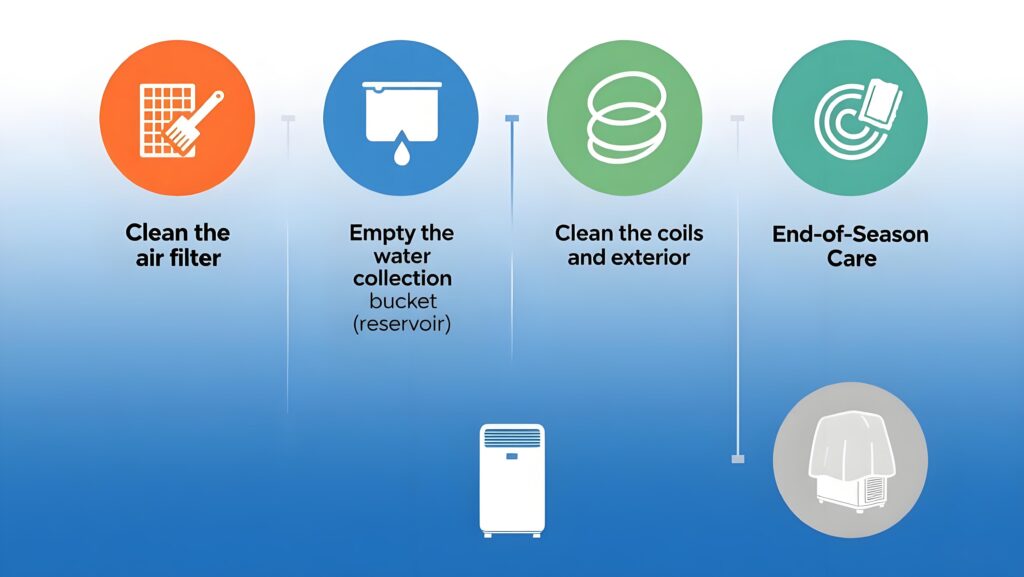
Essential Maintenance Schedule: Regular maintenance is simple but crucial for unit longevity.
- Clean the air filter: Do this every two to three weeks, or as recommended in the user manual. A clogged filter restricts airflow, drastically reducing efficiency (Coefficient of Performance – COP) and potentially causing component failure. Rinse it with warm water and let it dry completely before reinserting.
- Empty the water collection bucket (reservoir): Regularly or, better yet, use the continuous drainage (condensate drain hose) option if available.
- Clean the coils and exterior: Keep the condenser coil and evaporator coil (accessible per manual) clean and free from dust annually to maintain heat exchange efficiency.
- End-of-Season Care: For seasonal use, clean the unit thoroughly and store it upright in a dry place.
Troubleshooting Common Issues (FAQ):
- Dehumidifier not extracting water/No condensation: Is the humidity setpoint too high? Is the room temperature below the minimum operating temperature (e.g., 41°F/5°C for many refrigerant dehumidifiers)? Is the air filter dirty? Ensure the unit’s capacity is correctly sized for the room volume and dampness level.
- Unit is running but outlet air feels warm: This is normal; the refrigeration cycle (compressor work) generates heat which is expelled with the dry air.
- Unusual noises (e.g., rattling, grinding): Check for loose parts. Rattling might indicate a loose fan blade. Grinding noises often suggest a serious compressor issue – contact technical support or customer service.
- Water leakage: Ensure the water tank is correctly seated and the drain hose (if used) is not kinked, blocked, or leaking at the connection point.
By following these simple tips, you can significantly extend the service life or lifespan of your dehumidifier, maintain its energy efficiency, and ensure it continues to protect your home from moisture-related issues effectively. For further assistance, consult our detailed user manuals or contact our dedicated customer support team.
