
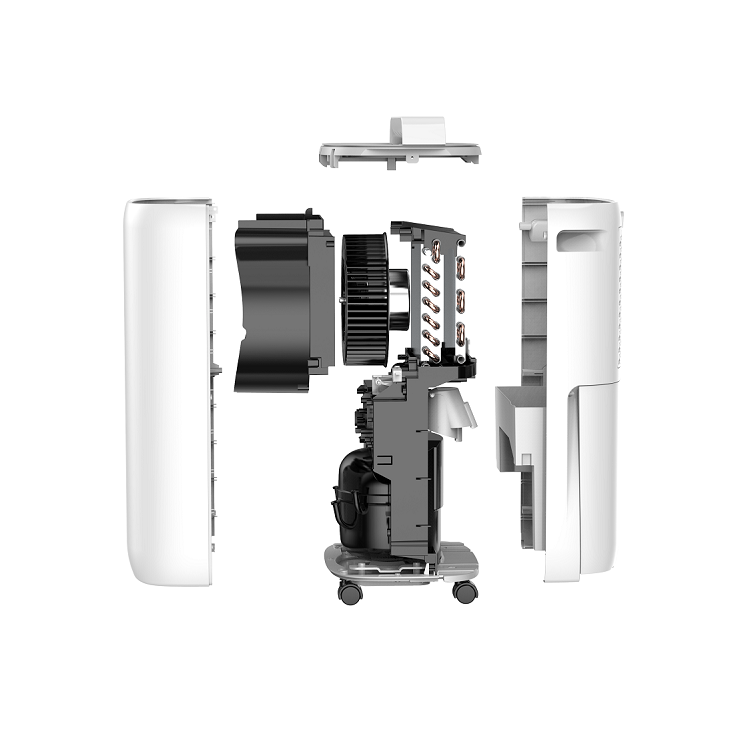
You’ve decided to buy a dehumidifier, but how does this appliance actually remove water from the air? Understanding the basic dehumidifier working principle can help you use it more effectively and appreciate the engineering behind it.
Most consumer dehumidifiers use a refrigeration-based system, similar to an air conditioner. Here’s a simple breakdown:
- Fan Intake: A fan draws moist, humid air from the room into the dehumidifier.
- Cooling Coils: This air passes over a set of cold coils filled with refrigerant. As the air cools, its moisture condenses on the coils, much like water droplets form on a cold drink.
- Water Collection: The condensed water drips down into a collection bucket or flows out through a drain hose.
- Reheating: The now-dry air then passes over the warm condenser coils (which heat up as part of the cooling process), bringing it back to a comfortable temperature.
- Release: The dry, slightly warm air is released back into the room.
This cycle repeats continuously until the desired humidity level is set on the dehumidifier’s humidistat.
Operation Guide and Tips:
- Positioning: Place your dehumidifier in the center of the problem area, away from walls and furniture for proper airflow. Basements and laundry rooms are common starting points.
- Settings: Set the humidistat between 30% and 50% relative humidity for optimal comfort and efficiency.
- Maintenance: Regularly clean the air filter. A dirty filter restricts airflow and drastically reduces the dehumidifier’s efficiency. Empty the water tank frequently to avoid overflow and mildew. For continuous operation, use a dehumidifier with pump or connect a hose for automatic drainage.
- Doors and Windows: Close doors and windows in the room where the dehumidifier is running to prevent more humid air from entering.
By following this dehumidifier guide, you ensure your unit works at peak performance, extending its lifespan and maximizing its benefits.
